Astaxanthin is a substance with antioxidant properties. It may offer slight benefits for oxidative stress, skin health, eye fatigue and some markers of cardiovascular health. However, its effects are generally mild, and you should not expect miracles from it.
It makes the most sense as a supplement to a healthy lifestyle, not as a replacement for a varied diet, exercise, sleep, sun protection or doctor‑recommended treatment. Caution is advised for pregnant or breastfeeding women, children and people taking blood‑thinning medicines.
What is astaxanthin?
Astaxanthin is a natural red‑orange pigment from the carotenoid group. It is mainly found in marine organisms – for example, salmon, trout, prawns, krill and crabs. Astaxanthin is responsible for the pink‑red colour of some marine animals. In food supplements, the most commonly used form is astaxanthin derived from the microalga Haematococcus pluvialis.
From a nutritional perspective, it is neither a vitamin nor an essential nutrient. This means that not consuming astaxanthin does not cause a classic ‘deficiency’, as a lack of vitamin C does, for example. It is instead classified as a bioactive substance that may influence oxidative stress, inflammatory processes and the condition of certain tissues. It is fat‑soluble and therefore better absorbed when taken with a fat‑containing food.

How does astaxanthin work in the body?
Astaxanthin is most often described as an antioxidant. However, this does not mean that it ‘miraculously cleanses the body of toxins’. It is more accurate to say that it may help mitigate some of the effects of oxidative stress – a state in which there is an excess of free radicals and the body cannot sufficiently compensate using its own antioxidant systems.
Its effects probably go even further. Studies suggest that it may also influence cellular signalling pathways related to inflammation, antioxidant defence and the protection of cell membranes. Review papers therefore describe astaxanthin as a substance with antioxidant and anti‑inflammatory potential, but also emphasise that the magnitude of its effect in humans varies depending on the dose, duration of use and health status.
Possible benefits of astaxanthin
1. Oxidative stress and inflammation
One of the main reasons astaxanthin is discussed is its possible effect on oxidative stress. You can think of this as a state in which the body is exposed to a greater load of free radicals than it can normally balance using its own protective mechanisms.
Some studies suggest that astaxanthin may help in this regard. A systematic review and meta‑analysis of 12 randomised controlled trials involving a total of 380 participants showed that supplementation with astaxanthin slightly reduced levels of malondialdehyde, which is one of the markers of oxidative damage to lipids in the body. In people with type 2 diabetes, it also reduced levels of interleukin‑6, a substance associated with inflammatory processes.
However, not all inflammatory markers improved. For example, there was no significant effect on C‑reactive protein or tumour necrosis factor alpha. Astaxanthin is therefore not a cure‑all, but it may be an interesting supplement for supporting the body’s natural defences against oxidative stress.
2. Skin, UV radiation and skin ageing
Astaxanthin may also be an interesting aid in skincare. Some clinical studies suggest that it may contribute to improvements in skin hydration and elasticity, reductions in transepidermal water loss and a slight improvement in fine wrinkles. In other words, thanks to better protection against oxidative stress, the skin may be more resilient and appear healthier.
Astaxanthin may also help protect the skin from some damage caused by UV radiation. However, this does not mean that it can replace sunscreen or sensible sun‑safe behaviour. Consider it another piece in the puzzle of skincare and skin health.
The best results usually come from a combination of several good habits – a good‑quality diet, enough protein, omega‑3 fatty acids, fruit and vegetables, sufficient sleep and regular sun protection. Astaxanthin can therefore be a useful addition to what you are already doing for your skin.
3. Vision and eye fatigue
If you often strain your eyes, astaxanthin may be helpful – for example, if you spend long hours at a computer, reading or looking at screens. Some smaller studies involving healthy adults or people with greater visual demands suggest that astaxanthin could support certain aspects of visual function.
For example, a double‑blind, placebo‑controlled study from 2022 examined astaxanthin derived from the alga Haematococcus pluvialis in healthy Japanese men and evaluated its effect on visual acuity. It found that astaxanthin helped reduce eye strain caused by screen work in middle‑aged and older participants.
However, we cannot yet claim that it reliably resolves fatigue, dryness or impaired vision. It may nevertheless be one of the supplements that supports overall eye care.

4. Cholesterol, blood pressure and metabolic health
The evidence regarding astaxanthin’s effects on heart health is not yet entirely clear, but some studies suggest that it may offer several benefits.
One of the best‑supported effects is a possible increase in HDL cholesterol, the “good” cholesterol. A randomised study involving people with slightly elevated blood lipid levels showed that astaxanthin may increase HDL cholesterol and adiponectin. Some doses also produced a reduction in triglycerides. Similarly, a meta‑analysis of 14 randomised studies found a slight increase in HDL cholesterol but did not show a significant effect on total cholesterol, LDL cholesterol, triglycerides, body weight, BMI, fasting glucose, HbA1c or blood pressure.
There is also a possible effect on LDL cholesterol oxidation. Astaxanthin may reduce the susceptibility of LDL particles to oxidative damage, which contributes to the development of atherosclerosis. Studies involving healthy volunteers showed that supplementation with astaxanthin reduced oxidation of LDL particles.
Some studies also suggest a slight reduction in inflammatory and oxidative markers, such as C‑reactive protein. A 2020 meta‑analysis found a decrease in CRP, mainly with longer‑term use of at least 12 weeks or with higher doses of more than 12 mg per day. The effects on blood pressure appear to be relatively mild. A meta‑analysis of 10 randomised studies involving 493 participants showed a slight decrease in diastolic, or ‘lower’, blood pressure, particularly in patients and at doses of at least 12 mg per day. Systolic blood pressure did not change significantly.
5. Sports performance and recovery
Theoretically, astaxanthin could help by reducing oxidative stress and inflammatory responses after exertion. However, studies are inconclusive. A more recent study involving young taekwondo athletes found that taking 12 mg of astaxanthin daily for four weeks improved some specific performance tests but did not change body composition.
Safety and side effects
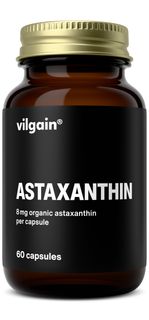
Astaxanthin generally appears to be well tolerated. Europeanand UK assessments state that the currently permitted level in supplements corresponds to a maximum daily dose of 8 mg of astaxanthin. This amount is considered safe for adults and adolescents over 14 years of age, even when normal dietary intake is taken into account.
The most commonly reported side effects are mild digestive issues, such as diarrhoea. At higher doses, more frequent bowel movements or reddish‑orange stools may occur.
Caution is advised for people taking warfarin or other medicines that affect blood clotting. There is a case report of a possible interaction between warfarin and astaxanthin, so people taking these medicines should discuss their use with a doctor.
Astaxanthin supplementation should also be discussed with a doctor by pregnant or breastfeeding women, children, people with liver or kidney disease and those taking several medicines. This is not because it has been proven to be dangerous for these groups, but because there is less high‑quality safety data available for them.
Who might benefit from astaxanthin?
Astaxanthin may make sense primarily for adults seeking a supplement with antioxidant and mild anti‑inflammatory potential. In practice, it may be useful for people who want to support their skin health, are frequently exposed to the sun, spend a lot of time looking at screens, exercise intensively or have an increased cardiometabolic risk. For the last group, however, it is important to emphasise that astaxanthin does not replace weight loss, exercise or treatment for high cholesterol, diabetes or high blood pressure.
How to take astaxanthin
Typical doses used in studies range from approximately 4 to 12 mg per day, although some studies use higher doses. From a practical perspective, it is reasonable to follow the dosage instructions on the packaging and monitor how you respond.
Bottom line
Astaxanthin is a carotenoid from marine sources, most commonly derived from the microalga Haematococcus pluvialis. It has a reasonably strong biological basis: it acts as an antioxidant, may influence inflammatory processes and may protect cell membranes from some oxidative damage. The strongest evidence relates to oxidative stress, skin health, certain visual parameters and possibly some aspects of sports recovery.
However, do not expect it to solve all your problems. Its effects are usually mild, studies are often small and many claims require further research. For astaxanthin to be useful, it should be built on foundations such as a good‑quality diet, sufficient exercise, sleep and protection from excessive UV exposure.