-
All soy sauces can seem the same: a dark liquid with a salty taste, added by the splash to rice, noodles or marinades.
-
But there can be a big difference between individual bottles. Some are the result of the long fermentation of soya beans, wheat, salt and water. Others are made more quickly using hydrolysed vegetable protein, colourings, sugar and other flavourings.
How is real soy sauce made?
Traditionally made soy sauce is produced through fermentation. Its basic ingredients are soya beans, wheat, salt and water. In Japanese production, a substance called "koji" is prepared first. This is a mixture of soya and wheat inoculated with a mould from the Aspergillus genus, most commonly Aspergillus oryzae or Aspergillus sojae. These microorganisms produce enzymes that begin breaking down proteins and carbohydrates into smaller, flavour‑active compounds.
The koji is then mixed with a salt solution to create a fermenting mixture called moromi. This is aged for weeks or months, and even longer for some traditional products. During this stage, enzymes, yeasts and lactic acid bacteria are at work. A complex flavour gradually develops, combining saltiness, subtle sweetness, acidity, aroma and, above all, umami. Traditional soy sauce fermentation can take anywhere from approximately one month to several years, depending on the type of product and production method.
Finally, the moromi is pressed, filtered, heat‑treated and bottled. Good‑quality soy sauce is therefore not simply coloured, salty water. It is a fermented product whose flavour develops gradually.

Fermentation vs. hydrolysis. What’s the difference?
With fermentation, flavour develops slowly. Enzymes and microorganisms break down the proteins in soya and wheat into amino acids and peptides. Carbohydrates are converted into other substances, and numerous aromatic compounds are formed. The result is a fuller, rounder and more complex flavour.
Hydrolysis is a faster and often cheaper option
Hydrolysis works on a different principle. Plant protein, often soya protein, is chemically or enzymatically broken down into smaller components. This produces hydrolysed vegetable protein or, more specifically, hydrolysed soya protein. The main advantages for manufacturers are speed and cost. Hydrolysed protein is used in Asian‑style sauces that do not undergo traditional fermentation. It may also be added to fermented sauces to intensify their flavour.
Hydrolysate does provide a salty and ‘meaty’ taste because it contains free amino acids. However, it cannot fully replicate the complex aroma produced through long fermentation. This is why cheaper sauces containing hydrolysed protein tend to have a sharper, flatter taste and often require additional ingredients, such as sugar, colourings, flavourings or thickeners.
What is hydrolysed soy protein?
Hydrolysed soya protein is soya protein that has been broken down into smaller components, including amino acids and short peptides. In the food industry, it is used as a flavour enhancer because it intensifies salty and umami flavours.
There is no need to be afraid of hydrolysed soya protein itself, as it is not a dangerous ingredient. However, it is useful to know that it would not normally appear in traditionally fermented soy sauce. If a sauce is based on hydrolysate, it has usually been produced using a faster and cheaper method, which may not provide the same full and complex flavour as properly fermented soy sauce.
Historically, there have also been concerns about the contaminant 3‑MCPD in some hydrolysed proteins. This can form during the acid hydrolysis of plant proteins. European and American authorities have therefore introduced limits or monitoring recommendations for hydrolysed proteins and soy sauces.

How to read the ingredients of soy sauce?
For classic fermented soy sauce, look for the simplest possible ingredients: water, soybeans, wheat, salt
The order may vary, and some products may list naturally occurring ingredients associated with fermentation. Some sauces may also contain alcohol, either as a natural product of fermentation or as an ingredient that helps to stabilise the product.
Pay attention if the ingredients include:
-
hydrolysed vegetable or soy protein
-
caramel or other colourings
-
sugar or glucose‑fructose syrup
-
flavourings
-
thickeners
-
preservatives
-
vinegar
-
wine
-
plum jam or other fruit ingredients
None of these ingredients necessarily means that the product is harmful or of poor quality.
Some types of soy sauces may contain additives
In some styles, such as dark Chinese soy sauce, caramel or sugar may form part of the traditional flavour profile. However, if you are buying a regular product labelled simply as "soy sauce" and want a fermented sauce, a long ingredients list may indicate that you are looking at a seasoning sauce inspired by soy sauce rather than a traditionally fermented product.
Umami, or why does soy sauce taste so good?
Umami is the fifth basic taste, alongside sweet, salty, sour and bitter. We perceive it as a meaty, savoury, brothy, full or "deep" flavour. In soy sauce, umami is mainly associated with amino acids, particularly glutamate, as well as peptides, nucleotides and other substances formed during fermentation.
Hydrolysed protein partially mimics umami because it also provides free amino acids. The difference lies in the complexity. Fermentation creates a broader range of flavour and aromatic compounds. As a result, good‑quality soy sauce does not taste simply salty. It has layers, including subtle sweetness, acidity, aroma, aftertaste and fullness.
Soy sauce, tamari and coconut aminos: How do they differ?
Soy sauce
Classic soy sauce is usually made from soya beans, wheat, salt and water. It has a distinct salty and umami flavour and is suitable for both hot and cold dishes. It is versatile and can be used in marinades, stir‑fries, soups, sauces and dressings, or to season finished dishes.
Tamari
Tamari is a Japanese type of sauce that usually contains a higher proportion of soya and often contains little or no wheat. This makes it a popular choice for people looking for a gluten‑free alternative. However, you should always check the label and ideally look for an explicit gluten‑free declaration.
Tamari usually has a fuller, rounder and less sharp flavour. It is suitable for dips and marinades, with tofu, rice or vegetables, and in dishes where you want a pronounced umami flavour.
Coconut aminos
Coconut aminos are an alternative made from fermented coconut sap or nectar and salt. It does not contain soya or wheat, so it is mainly used by people avoiding soya or gluten. However, the taste is different. It is generally sweeter, less salty and less intense than classic soy sauce. It should therefore be considered an alternative for certain recipes rather than a perfect substitute.
Which one should you use?
| Product | Taste | When to use |
| Classic soy sauce | salty, intense, umami | noodles, rice, marinades, stir‑fries, soups, sauces |
| Tamari | fuller, rounder, often less sharp | gluten‑free cooking, tofu, dips, salad dressings, milder dishes |
| Coconut aminos | milder, sweeter, less salty | when avoiding soy/gluten grains, for lighter marinades and dressings |
How to use soy sauce outside of Asian cuisine?
Soy sauce is not only for sushi or noodles. Thanks to its umami flavour, it can enhance many everyday dishes. However, as it is quite salty, it should be used sparingly.
You can try adding it to:
-
marinades for chicken, beef, tofu or tempeh
-
vegetable stir‑fries
-
broths and creamy soups for a deeper flavour
-
sauces for meat
-
lentils, beans or chickpeas
-
salad dressings with lemon, sesame oil or honey
-
homemade mayonnaise or yoghurt‑based dips
-
roasted vegetables
-
burgers, meatloaf or other minced‑meat mixtures
-
to rice, couscous or grain bowls

Image by magnific.com

What should you watch out for?
The biggest disadvantage of soy sauce is its high salt content. It is therefore worth using it in small amounts and reducing the amount of additional salt in the recipe where necessary. If you have high blood pressure or have been advised to reduce your sodium intake, it may make sense to choose a reduced‑salt version. However, even reduced‑salt soy sauce should be used sparingly.
The second consideration is the ingredients list. If you want a good‑quality fermented sauce, choose a product with a short ingredients list and no hydrolysed protein. If price is your main concern and you use the sauce only occasionally in marinades, choosing a cheaper version is not necessarily a problem. It is simply useful to know what you are buying.
Should I be afraid of sodium?
Sodium is essential for the body. It helps maintain fluid balance and is involved in nerve transmission and muscle function. The problem is not sodium itself, but excessive intake. The WHOrecommends consuming less than 2,000mg of sodium per day, which is equivalent to approximately 5g of salt. The average worldwide intake is more than double this amount, at approximately 4,278mg of sodium per day, or around 11g of salt.
A high long‑term sodium intake is a risk factor for high blood pressure and, consequently, cardiovascular diseases such as stroke and ischaemic heart disease. Soy sauce is a very concentrated source of sodium, so it’s better to use it by the teaspoon rather than “by eye” and keep in mind that it partially replaces salt in the dish.
Soy sauce spray can help reduce sodium intake
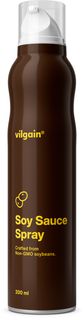
Soy sauce in a spray bottle can be a practical option, as it allows for lighter and more controlled application. Instead of pouring the sauce, you can lightly season the food with a few sprays, making it easier to avoid using too much.
Athletes may need more sodium than the average person
Sodium requirements vary. Athletes, people working in hot conditions, regular sauna users and those who sweat heavily may lose more sodium through sweat. It is not usually necessary to supplement electrolytes deliberately after an ordinary short workout. However, sodium supplementation may be useful during prolonged physical activity, hot conditions or periods of significant sweating.
Potassium intake also matters
The balance between sodium and potassium is also important. Potassium, which is found mainly in fruit, vegetables, pulses, potatoes, nuts and dairy products, can help to counter some of the negative effects of a high sodium intake on blood pressure. Research also suggests that the sodium‑to‑potassium ratio may be a better indicator of blood pressure than sodium intake alone.
What’s the takeaway?
Good‑quality soy sauce is a fermented product. If you want ‘real’ soy sauce, look for a short ingredients list containing water, soya beans, wheat and salt. Hydrolysed soya protein, caramel, sugar, flavourings or thickeners often indicate a faster and cheaper production method. Choose tamari primarily if you want a fuller soya flavour or are looking for a gluten‑free option, but always check the label. Coconut aminos is a milder, sweeter alternative for people avoiding soya or gluten.
FAQs
What is the difference between soy sauce and tamari?
Classic soy sauce is usually made from soya beans, wheat, salt and water. Tamari generally contains a higher proportion of soya and often contains no wheat, so it is frequently used as an alternative in gluten‑free cooking. However, this is not guaranteed, so always check the ingredients and look for gluten‑free certification.
Is soy sauce gluten‑free?
Most classic soy sauces are not gluten‑free because they are made with wheat. If you need a gluten‑free option, look for tamari or a soy sauce explicitly labelled as gluten‑free. For people with coeliac disease, it is not enough to assume that fermentation has removed the gluten. The product’s ingredients, labelling and gluten‑free certification are what matter.
How should I store soy sauce after opening?
Unopened soy sauce should be stored in a dark place away from sources of heat. After opening, many common products can be stored at room temperature, but refrigeration helps to preserve their flavour, colour and aroma. Manufacturers of fermented sauces often recommend storing them in the fridge after opening, primarily to maintain their quality.