-
Probiotics are not universal:Their effects depend on the specific strain and the intended use. The strongest evidence exists for antibiotic‑associated diarrhoea (AAD) and upper respiratory tract infections (URTIs, e.g. colds). For irritable bowel syndrome (IBS), results are more variable.
-
Prebiotics are “food” for the microbiome:They are often part of fibre, but not all fibre is prebiotic. Beyond classic prebiotics, other compounds, such as polyphenols, can also exert a "prebiotic effect".
What are probiotics?
Probiotics are live microorganisms that—when consumed in sufficient amounts—provide a health benefit to the host. They help maintain the balance of gut microbiota, inhibit harmful bacteria, and support digestion.
In practice, they are available as supplements (capsules, powders) or in certain fermented foods and drinks.
Typically, these are various bacteria (e.g., genera Lactobacillus/Lacticaseibacillus, Bifidobacterium) or yeasts (e.g., Saccharomyces).
What are probiotics traditionally used for?
Traditionally (and often in marketing), probiotics are mainly associated with “digestive support” and “gut microbiome balance”, diarrhoea (“post‑antibiotics”), irritable bowel syndrome (IBS), immune support and more recently with stress, mood, and sleep (the gut–brain axis).
However, “traditionally used” does not mean equally effective for everyone or in every situation. With probiotics, the specific strain and context are critical.
Why strain matters for probiotics (strain specificity)
Saying “probiotics work” is a bit like saying “vitamins help immunity”. It’s too broad to be meaningful.
-
Vitamin C ≠ Vitamin D ≠ Vitamin B12
-
Effects, doses and who benefits all differ
The same applies to probiotics:
-
“Probiotic” = like saying "vitamin" (too general)
-
“Lactobacillus” or “Bifidobacterium” is like saying “B vitamins”
-
A specific strain (e.g., Bifidobacterium longum 35624) is like saying “vitamin D3”
So you can't just say “probiotics work” or “probiotics don’t work”. You have to ask: Which strain? At what dose? For how long? For which problem?
Buying a random probiotic without checking the strain is, in many cases, unlikely to be worthwhile.
When can probiotics make sense?
Below, we list areas where some probiotics are most evidenced to help. But, again, this can't be generalised.
1) Antibiotic‑associated diarrhoea (AAD)
Meta‑analyses suggest probiotics may reduce the risk of diarrhoea during antibiotic use, particularly at higher doses.
The authors also report the figure NNT ≈ 20. If 20 people take probiotics alongside antibiotics, 1 person may benefit.The other 19 would either not have developed diarrhoea anyway or would develop it regardless. In other words, it helps some, but it’s not a guarantee for everyone.
So the effect is real but modest, and more noticeable when baseline risk is moderate to high.
Among probiotics with the most frequently confirmed effects on antibiotic‑associated diarrhoea (AAD) are mainly Saccharomyces boulardii, Lactobacillus acidophilus (including combinations), Lactobacillus casei (including combinations), specifically the often‑mentioned combination Lactobacillus acidophilus CL1285 + Lactobacillus casei LBC80R.
2) Acute upper respiratory tract infections (URTI)
Cochrane review states that probiotics may reduce the proportion of people who get at least one episode of URTI, reduce the number of episodes, shorten the duration of illness (by about 1–2 days) and slightly reduce the need for antibiotics.
Adverse effects were overall similar to placebo (most commonly digestive discomfort).
The three best‑supported (most frequently studied) strains associated with URTI prevention in the Cochrane review are Lacticaseibacillus rhamnosus GG (LGG), Lacticaseibacillus casei DN‑114001 (CNCM I‑1518) (e.g., in “Actimel”) and Bifidobacterium longum BB536.
3) Irritable bowel syndrome (IBS)
For IBS, probiotics can reduce some symptoms in a portion of people, most commonly abdominal pain and sometimes overall symptom burden. However, results are highly variable depending on strain, dose, duration, and IBS subtype.
Because of this variability, the American Gastroenterological Association (AGA) does not recommend routine use of probiotics for IBS. There are many studies, but they are highly heterogeneous (different strains, doses, designs, goals), and the overall certainty of the evidence is low.
For IBS symptoms, the following strains are generally recommended: Bifidobacterium longum 35624, Lactobacillus/Lacticaseibacillus rhamnosus GG, Lactobacillus/Lactiplantibacillus plantarum 299v, Saccharomyces cerevisiae CNCM I‑3856 and Bacillus coagulans Unique IS2.
4) Depression and anxiety (emerging evidence)
A systematic review and meta‑analysis suggest probiotics may have modest antidepressant effects, particularly in clinically diagnosed populations.
However, results may be influenced by study design and measurement methods.
The most frequently studied (and repeatedly used in intervention arms) are mainly combinations of Lactobacillus helveticus + Bifidobacterium longum, also Bifidobacterium longum (alone), Lactobacillus plantarum and Bifidobacterium breve (alone and in combination)
Risks of probiotics
For most healthy people, probiotics are well tolerated and side effects are mainly mild digestive issues (bloating, flatulence, changes in stool).
Rare but serious complications, mainly in vulnerable individuals, include:
-
Bloodstream infections (e.g., bacteraemia/sepsis), described with some “probiotic” bacteria and also fungaemia with Saccharomyces boulardii, typically in people with severe illness, after surgery, in the ICU or with a catheter.
-
D‑lactic acidosis in predisposed individuals (e.g., with certain intestinal disorders).
There is also a theoretical concern about antibiotic resistance gene transfer between bacteria in the gut (which is why the quality and safety of specific strains are addressed).
If you are immunocompromised, seriously ill, post‑surgery or have a catheter, consult your doctor before use.
Foods rich in “natural” probiotics
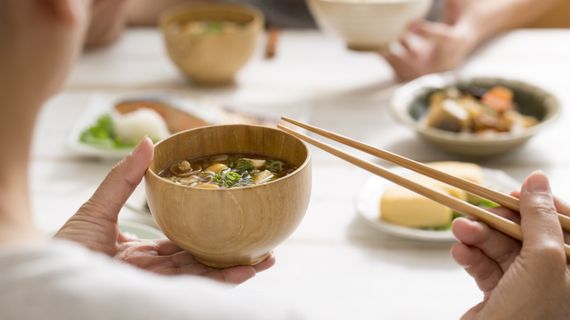
Not all fermented foods contain live cultures (some are pasteurised after production). Typical sources include:
-
yoghurt / fermented dairy products (if they contain live cultures)
-
sauerkraut
-
kimchi

Image by freepik.com

What are prebiotics?
According to the International Scientific Association for Probiotics and Prebiotics (ISAPP), prebiotics are: “substrates that are selectively utilised by host microorganisms and confer a health benefit.”
There is an ongoing debate about the word “selectively”, as real‑world effects are often broader and depend on dose and individual microbiome composition.
In practice, this means that a prebiotic reaches the colon undigested, where it is fermented by the microbiome, metabolites are produced and these metabolites have a beneficial effect on health.
Fibre is not the same as a prebiotic
Fibre = broad category
Fibre is an umbrella term for indigestible (or poorly digestible) components of food—often of plant origin. Some fibre is fermentable (bacteria can use it), some is hardly fermentable at all.
Prebiotic = a specific subset
Prebiotics and fibre share properties such as resistance to digestion and fermentability, but not all fibre is a prebiotic (and theoretically not every prebiotic is fibre).
The key difference is that not all fibre is fermentable and/or not all demonstrably lead to a health benefit via the microbiome, whereas a prebiotic must meet these conditions.
The prebiotic effect
Because definitions can be confusing, the term prebiotic effect is used. It describes: a health benefit resulting from changes in the microbiome caused by a substance being utilised by microorganisms.
This means even non‑classic prebiotics can still influence gut health.
Polyphenols and prebiotic action
Polyphenols are plant bioactive compounds that are not traditionally classified as prebiotics, but they are often described as having a prebiotic effect. They can modulate the gut microbiome, supporting the growth of some “beneficial” bacteria and suppressing others.
How do prebiotics work?
The classic mechanism is fermentation. Bacteria from prebiotics produce metabolites, mainly SCFA (short‑chain fatty acids, such as butyrate).
Butyrate is especially important because it serves as energy for colon cells. SCFA also lowers pH (which makes life harder for some pathogens) and can have anti‑inflammatory effects.
The microbiome functions as a network, where one species breaks down compounds that others then use (cross‑feeding).

Potential benefits of prebiotics
Prebiotics are most often associated with improved gut comfort and better bowel function. Current research also describes their possible broader impacts on other areas of health. Review papers state that potential benefits may also relate to cardiometabolic health (e.g., lipids and insulin resistance), mental health, bone metabolism and other systems.
There is also a description of immune modulation—often indirectly, precisely through changes in the microbiome and its metabolites.
Gut–brain axis
A review from 2025 describes the hypothesis that prebiotics may, via SCFA and the “gut–brain axis”, influence neuroactive signals and inflammation, which could affect mood and cognition, while also noting that more research is needed.
Sources of prebiotics (and prebiotic‑like compounds)
-
Inulin: chicory root, garlic, Jerusalem artichoke
-
FOS (fructooligosaccharides): bananas, onions, asparagus
-
GOS (galactooligosaccharides): human and cow’s milk
-
HMO (human milk oligosaccharides): breast milk
-
Resistant starch: green bananas, cooked and cooled potatoes, legumes
-
XOS (xylooligosaccharides): corn cobs, bamboo shoots
-
Polyphenols: olive oil, blueberries, green tea, coffee

Bottom line
Probiotics and prebiotics can be useful, but only if you know why you are using them. For probiotics, the specific strain is crucial—different strains have different effects, so random probiotics often don’t make sense. Most data is for prevention of diarrhoea with antibiotics (the effect is rather mild, helping about 1 in 20 people) and for prevention/shortening of common upper respiratory tract infections; for IBS, some strains can mainly improve abdominal pain, but results are variable. Most healthy people tolerate them well, but caution is warranted in at‑risk groups.
Prebiotics are “food” for the microbiome—often part of fibre, but not all fibre is a prebiotic. And even some substances (e.g., polyphenols) may not be classic prebiotics, but can still have a prebiotic effect.