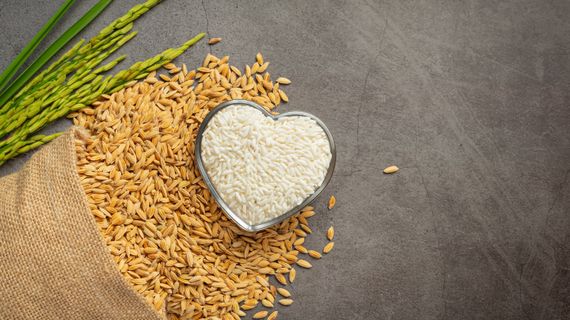
Whole foods are generally less energy‑dense than processed foods, but they are packed with important macro- and micronutrients or bioactive substances.
However, even in the case of processed foods, some products can form part of a healthy and balanced diet – even on a regular basis.
What are whole foods?
Whole foods are foods that are minimally processed and remain as close as possible to their original, natural state. For the most part, these foods are of plant origin, such as cereals, pseudocereals, vegetables, fruits, legumes, nuts, seeds or mushrooms. In the animal kingdom, whole foods include primarily fresh or frozen meat, milk and unsweetened yoghurt.
And why are they so important in your diet? Because food processing can result in the loss of certain macro- and micronutrients or, conversely, the addition of ingredients that may significantly alter the nature and nutritional properties of the food in question – depending, of course, on the degree of processing and the composition of the specific product. In general, whole foods are a source of:
Fibre (whole grain cereals, fruit, vegetables)
Micronutrients (vitamins and minerals)
Bioactive substances with antioxidant or anti‑inflammatory properties (fruits, vegetables, some legumes, nuts and seeds)
What are the health benefits of whole foods?
Because whole foods contain higher levels of certain beneficial substances than processed foods (see examples above), they have a positive impact on human health when consumed regularly. In particular, research has focused on the following areas:
The gut microbiome: Certain components found mainly in whole grains, fruit and vegetables positively influence the composition and diversity of gut microbiota, as well as the regulation of metabolites produced by these bacteria. According to recent studies, key factors include specific carbohydrate components, fibre and polyphenols. Evidence also suggests that whole foods may help modulate the gut microbiome in some chronic gastrointestinal diseases, metabolic disorders and even infectious diseases.
Heart and vascular health: Maintaining a healthy body weight, managing body fat, engaging in regular exercise and consuming a diet rich in unsaturated fatty acids – including omega‑3s and beta‑glucans (particularly found in cereals)—are essential for heart health. These substances occur naturally in whole foods, and research confirms that a whole‑food‑based diet, particularly one high in plant‑based foods, benefits cardiovascular health in multiple ways. These include improved control of total and LDL cholesterol, lower blood pressure and better weight management.
Glycaemic control: In addition to cardiovascular benefits, diets rich in whole foods and predominantly plant‑based ingredients have been studied in relation to glycaemic control and type 2 diabetes. Research indicates that such a diet, combined with regular physical activity, is more effective in glycaemic control than drug treatment alone. Some individuals have even experienced remission of type 2 diabetes, meaning a resolution of symptoms and a return to their pre‑diagnosis state.
Mental health: Studies confirm that consuming unprocessed foods positively affects mental health—an area where dietary impact might not be immediately obvious. An adequate intake of high‑quality macro- and micronutrients, as well as the bioactive substances mentioned earlier, plays a crucial role in the production of neurotransmitters, which are essential for maintaining mental well‑being.
Feeling full and optimal weight: Overweight and obesity are serious conditions that contribute to various negative health outcomes. Due to their high fibre content, whole foods have the ability to keep you full for a long time, which helps maintain a healthy weight and prevents subsequent cravings for sugary or high‑calorie foods.

Classification of food processing rates
Due to the complexity of nutrition, it is challenging to clearly define which foods are classified as unprocessed or processed or to determine their specific level of processing. To address this, researchers have developed classification systems that standardise the categorisation of processed foods and simplify their classification.
One of the more recent and user‑friendly classification scales for food processing levels is the NOVA system, which was first published in a scientific journal in 2009. This tool classifies foods into four categories based on their degree of processing and also provides examples within each category.
1. Unprocessed or minimally processed foods
Unprocessed (or natural) foods are derived directly from plants or animals and undergo no modification after being obtained from nature. Minimally processed foods, on the other hand, are natural foods that have undergone processes such as cleaning, removal of inedible or undesirable parts, fractionation, grinding, drying, fermentation, pasteurisation, refrigeration or freezing. These processes may lead to some nutrient loss but do not involve the addition of oils, fats, sugar, salt or other substances.
|
|
2. Fats, oils, salt and sugar
This group, also known as processed culinary ingredients, consists of products extracted from natural foods through processes such aspressing, grinding, crushing and refining. These ingredients are commonly used in homes and restaurants to enhance flavour and prepare food, helping to create a wide variety of delicious dishes, including broths, soups, salads, cakes, breads, sweets and preserves.
It is advisable to use oils, fats, salt and sugar in small amounts to flavour and cook food. When used in moderation alongside natural or minimally processed foods, these ingredients contribute to a varied and enjoyable diet without being nutritionally unbalanced.
|
|
3. Processed foods
Processed foods are produced through industrial processing that involves the use of ingredients such as salt, sugar and oils. The primary purpose of this processing is to preserve the food or enhance its flavour.
These foods are derived directly from natural ingredients and are often considered modified versions of their original forms. They are typically consumedas side dishes or as part of culinary preparations alongside natural or minimally processed foods. Most processed foods contain only two or three ingredients.
|
|
4. Ultra‑processed foods
Ultra‑processed foods are industrial products made wholly or primarily from substances extracted from food (such as oils, fats, sugars, starches and proteins), derived from food ingredients (such as hydrogenated fats and modified starches) or synthesised from food substrates or other organic sources (such as flavour enhancers, colouring agents and other food additives that increase palatability).
Common production techniques include extrusion, pressing and pre‑processing by frying, among others. Beverages can also be classified as ultra‑processed. Group 1 foods (unprocessed or minimally processed foods) make up a very small proportion of ultra‑processed products or may be entirely absent.
|
|
What is considered a whole food according to the NOVA scale?
When examining the NOVA classification system, whole foods align most closely with Group 1 – Unprocessed or Minimally Processed Foods due to their natural state and minimal modification. However, it is important to note that some products in Groups 2 and 3 can still be part of a healthy and balanced diet. Of course, salt, sugar and oils should be used in moderation, and when selecting oils, it is essential to consider both their fatty acid content and suitability for cooking.
A similar principle applies to baked goods, cheese or canned fish, meat and pulses, which fall under Group 3 (Processed Foods). In these cases, the key is to focus on the composition of the specific product, its nutritional values and its salt content. If a product contains a higher amount of salt, it is advisable to adjust other meals throughout the day accordingly. For example, canned pulses can be blanched and rinsed with plain water, which helps to reduce the salt content from the brine.
Can processed foods have a place in a balanced diet?
If there is the opportunity and time to prepare meals from unprocessed ingredients, this is the best option. However, research confirms that even nutritionally rich canned foods (i.e., NOVA Group 3) with optimal composition and nutritional values can be part of a high‑quality and balanced diet. The same applies to cheese, where moderate consumption has a neutral or even positive effect on health.
Processed foods play a distinct role in sports nutrition. Since nutrient replenishment before, during, and after exercise follows different principles than a normal diet, it is not necessary to demonise all processed products used in sports. On the contrary, certain processed foods can offer better and faster replenishment of energy and essential nutrients than unprocessed foods.
Bottom line
According to experts, whole foods should form the basis of the human diet – especially because of their high content of health‑promoting substances and lower energy density. In fact, studies show that whole foods positively influence, for example, cardiovascular health, glycaemic control, maintenance of a normal weight, the composition of the gut microbiome and even mental health.
However, sometimes it can be difficult to know how processed a food actually is. The NOVA classification can be used as a guide, but even in this case, it cannot be taken entirely literally. While foods from Group 1 are obviously most appropriate, Group 2 and 3 items can be part of a healthy and balanced diet on a reasonable basis.