- Protein drinks are now a common part of people's diet, not only for athletes but also for those who want to lose weight or improve their health. They are often presented as a support for muscle growth and recovery after training.
- But the question is: does it make sense to take protein if you don't exercise? This question is asked by many people who want to use a protein supplement outside of a fitness setting, for example, as a snack or as part of a weight‑loss diet.
What is protein?
Protein is one of the three main macronutrients found in food. Protein is the building block of all cells, tissues and organs. They are found in muscles, bones, skin, hormones, enzymes and the immune system.
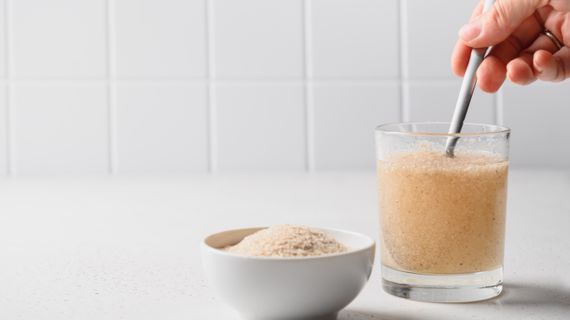
When we talk about "protein" in the context of nutrition, we often think of an instant protein supplement sold as a powder or ready‑to‑drink beverage. This is usually mixed with water or milk to create a quick and convenient source of protein. The most common types of protein powders include:
- Whey protein — highly digestible and high in essential amino acids.
- Casein protein — slower to digest; most suitable to consume in the evening.
- Plant‑based protein — e.g., from peas, rice or soya; suitable for vegans and people with milk protein allergies.
It is essential to understand that protein powder is not a magic solution. It is a concentrated source of protein — nothing more, nothing less. Its main advantage is convenience: easy preparation, fast absorption, and practical use in everyday life.
Why is protein important?
Protein is an essential nutrient for human health, growth, development and survival. They are composed of amino acids that are used not only to build body tissues but also to produce a number of key substances, such as enzymes, hormones, neurotransmitters (including dopamine and serotonin), antioxidant molecules (like glutathione) and energy metabolites (e.g., creatine and carnosine, as well as nitric oxide, NO).
Unlike fats and carbohydrates, amino acids contain nitrogen and sulphur, two elements that the body does not produce itself, and therefore, protein is irreplaceable in the diet.
Proteins and their function in the body
Dietary amino acids have a number of specialised functions:
- they promote muscle growth
- ensure a proper immune response (e.g., glutamine is a key source of energy for immune system cells)
- serves as fuel for the cells of the gut
- support the production of neurotransmitters that affect mood, sleep and appetite
- help regulate fat and sugar metabolism
- affect blood circulation (e.g., arginine as a precursor to nitric oxide)
Consequences of a lack of protein in the diet
Protein deficiency can lead to:
- increased loss of muscle mass
- weakened immune function
- impaired wound healing and regeneration
- increased fatigue and reduced performance
- oedema (swelling)
- impaired fertility
In children and the elderly, impaired growth or accelerated loss of muscle mass (sarcopenia) may also be a consequence. Even in developed countries, mild protein deficiency is often found in the elderly or those with illnesses, increasing the risk of infections, muscle weakness or prolonged recovery from surgery.
How much protein is needed?
The official recommendation for a healthy adult with minimal physical activity is 0.8 g of protein per kilogram of body weight per day. However, to maintain muscle mass and function, it is often advisable to consume 1.2‑1.6 g/kg/day, depending on physical activity, age and health status.
Protein and weight loss
Increased protein intake is often recommended as an aid to weight loss, and rightly so. Studies show that a high‑protein diet (typically 1.2‑1.6 g/kg/day) has several benefits:
- It increases satiety, thereby spontaneously reducing total calorie intake
- stimulates the thermic effect of the diet, i.e., more energy burned in digestion
- helps to protect muscle mass during a calorie deficit
However, these effects apply to a high total protein intake from all sources (i.e., from a normal diet), not automatically to supplementation with a protein drink.
When does it make sense to supplement protein for weight loss?
Supplementation with protein (e.g., whey) is only beneficial if the normal diet does not provide sufficient protein. For example, if a person is only consuming 0.8 g/kg/day, which is the recommended minimum intake, supplementing with a protein powder may be useful. However, if a person is already consuming 1.2‑1.6 g/kg/day through a normal diet, further increasing protein intake through supplementation may not provide significant additional benefits.
This is supported by a study by Smith et al. that examined postmenopausal women with obesity on a reduced diet. Although women who received an extra 0.4 g/kg/day of whey protein (1.2 g/kg/day total) had slightly less muscle loss than women consuming only 0.8 g/kg/day, this difference was small and clinically insignificant. In addition, neither group experienced an improvement in muscle strength.
Protein and muscle growth
Protein drinks are often associated with the idea of rapid muscle growth. It is true that adequate protein intake is a key building block for the formation of new muscle protein, but quantity alone is not enough. An external stimulus, such as strength training, is always needed for muscle growth.
Protein alone without exercise is not enough
This fact was confirmed by a large one‑year randomised controlled trial that looked at the effect of whey protein on healthy older people. It showed that:
Whey protein supplementation alone did not lead to any increase in muscle mass (as measured by MRI) or improvement in muscle strength compared to placebo,
A positive effect was only found in the group that also did high‑intensity strength training, where both muscle strength and functional ability improved.
This is because, without muscle activation (mechanical loading), the body has no reason to trigger muscle hypertrophy. In such a case, protein serves only for routine maintenance, not for growth.
Association vs. causation
Observational studies indicate that individuals with higher protein intake tend to have more muscle mass on average. But that doesn't mean that a protein drink causes muscle growth on its own. Higher protein intake is often correlated with a healthier lifestyle, more physical activity and better overall nutrition, so a direct causal link cannot be inferred from these data.
RCTs (randomised controlled trials) that test the effect of supplementation alone without exercise repeatedly show no or very weak effects. Thus, if one does not exercise, the protein drink does not work as a "muscle‑building" agent.

Does it make sense to take protein without exercise?
Based on current scientific evidence, it can be said that taking a protein supplement without strength training does not make sense if one is already getting enough protein from their diet. Protein itself is not a muscle growth stimulant or a "fat burner". It is only a source of amino acids, i.e., a nutrient, not a drug.
When does protein without exercise make sense?
There are situations, however, when supplementation may be justified even if one does not exercise:
1. Low dietary protein intakeFor example, seniors, individuals with a low appetite, vegans or those on a weight loss diet may find it challenging to obtain sufficient high‑quality protein in a normal diet. In this case, a protein supplement can help make up the deficit.
2. Reduction dietWhen in a calorie deficit, a higher protein intake is beneficial for protecting muscle mass and increasing satiety. If someone is restricting food and does not have the time or desire to prepare protein‑rich meals, instant protein may be a practical solution.
3. Ageing or convalescenceIn older age or when recovering from illness or injury, the need for protein may be higher. Studies show that taking a protein supplement in these cases can help reduce muscle loss, although without exercise, the effect won't be as pronounced.
When is it unnecessary?
If a person:
- does not exercise
- does not have an increased need for protein
- and eats a varied and protein‑rich diet
Then, protein supplementation is likely unnecessary and provides minimal or no benefit. In this case, it is better to focus on the quality of the regular diet and overall lifestyle.
When and how to include protein in the diet?
If a person has a reason to increase their protein intake, such as during weight loss, older age or due to a poor diet, a protein supplement can be a practical aid. But this doesn't mean you have to drink it after a workout or at a specific time. What matters in terms of long‑term effect is the total daily protein intake, not the specific time of consumption.
When is it appropriate to take protein?
- In the morning, to enrich your breakfast.
- Between meals as a snack: A protein drink is a good substitute for a sweet snack. You can combine it with fruit or nuts.
- Evening: If you are prone to evening cravings, protein (such as casein) can reduce their intensity.
How to include it in your diet?
- In porridge, yoghurt or cottage cheese: adding protein will increase the protein content without the need for a larger portion.
- In smoothies: the combination of fruit, milk and protein will create a relatively nutritious and filling meal.
- On its own: mixed with water or milk as a quick snack.
- In desserts or baking: it can be mixed into pancakes, cakes or custards.
Important note
A protein drink is not necessary for everyone. It is only an option to increase your protein intake practically, for example, when there is no time for food preparation. However, it is not a miracle cure or a necessity for a healthy lifestyle.
How much protein should you take in?
The recommended daily protein intake for an adult is at least 0.8 g per kilogram of body weight. However, this figure represents a bare minimum for survival, not the optimal amount for maintaining muscle mass, health or weight control.
Optimal intake for most people
Modern research indicates that the optimal protein intake for healthy adults is typically in the range of 1.2‑1.6 g/kg body weight per day, depending on age, physical activity and goals. It may be higher for athletes or when dieting. For example:
A person weighing 70 kg should ideally take in about 90‑110 g of protein per day.
However, these ranges do not mean that more = better. If a person does not exercise, increasing protein intake beyond about 1.6 g/kg/day is unlikely to provide any additional benefit. Moreover, it increases caloric intake, which can be counterproductive in weight loss.
How much protein powder should you use?
The dosage of instant protein should be based on the amount of protein you are already getting from your diet. A typical scoop of protein (30 g of powder) contains about 20‑25 g of protein.
Example:
If a person is supposed to take in 100 g of protein per day and only gets 70 g from their diet, 1 scoop of protein per day can practically make up for the missing portion.
In this case, supplementation makes sense. But if dietary intake already covers the need, the extra doses have no clear benefit and only increase caloric intake.
Protein drinks are not a dietary substitute
A protein drink is not a substitute for a varied diet. Protein from whole foods (meat, eggs, dairy, tofu) provides vitamins, minerals and other bioactive substances in addition to amino acids. Protein drinks are just supplements — practical, but not necessary.
Bottom line
A protein drink can be useful, but it's not a magic muscle‑growth agent or a weight‑loss tool in and of itself. It's just a handy source of quality protein that makes sense only if:
- you can't meet your daily protein needs with your regular diet
- you are in a calorie deficit and want to promote satiety and muscle mass protection
- you are an older person with an increased need for protein
- you need a quick and nutritious snack during the day
Conversely, if you eat a varied, protein‑rich diet and don't exercise, additional protein supplementation won't help with muscle growth and may not even lead to improved muscle function or body composition, according to available studies. The body needs an external stimulus to grow muscle, e.g., resistance training. Without it, protein will only be used for normal maintenance processes.